 Coding agents across runtimes & repos
Blog
Human Agent Collaboration: What Happens When Every Teammate Brings an Agent?
Shared context & human-agent workspaceSee how people and their agents keep questions, evidence and decisions together through real team handoffs.Recent posts
Coding agents across runtimes & repos Foundations & team design
Paperclip Alternatives: Choose by the Work You Need to Do
Compare eight Paperclip alternatives for coding, recurring research, reusable knowledge, and collaboration between people and their agents. Coding agents across runtimes & repos
Claude Code vs Codex (2026): Features, Pricing, and Performance
Compare Claude Code and Codex by how you review changes, control permissions, handle usage limits, and choose a coding agent for your project. Coding agents across runtimes & repos
Cursor vs Claude Code Comparison 2026: Which Is Better for Your Development Workflow?
Choose between Cursor and Claude Code by editing workflow, code quality and pricing, with CLI differences and ways to use Claude Code in Cursor.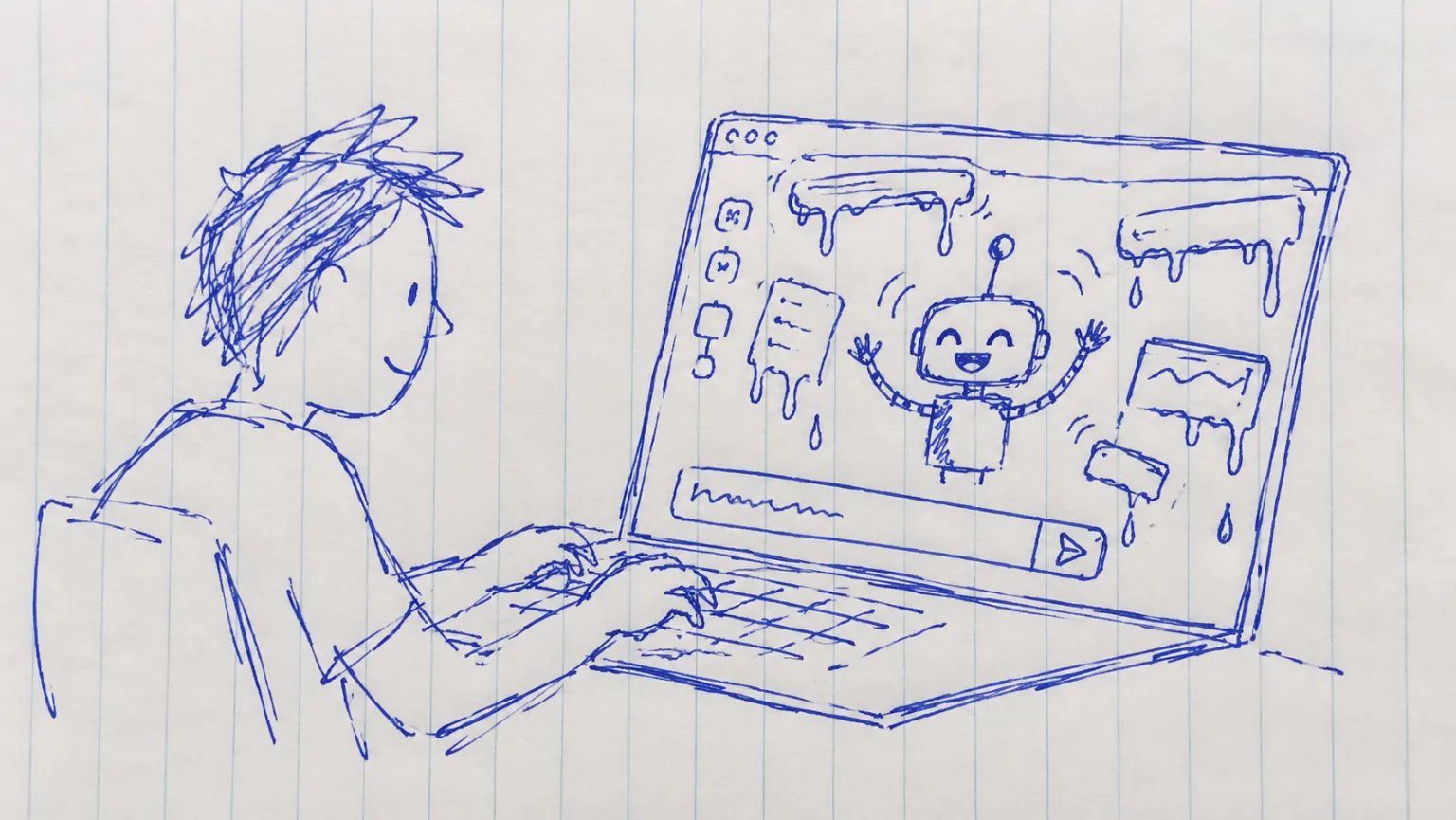 Shared context & human-agent workspace
How to build liquid software
Patrick Collison’s liquid software lets users ask an agent to change an app. See how a user community helps makers hear requests and review shared changes.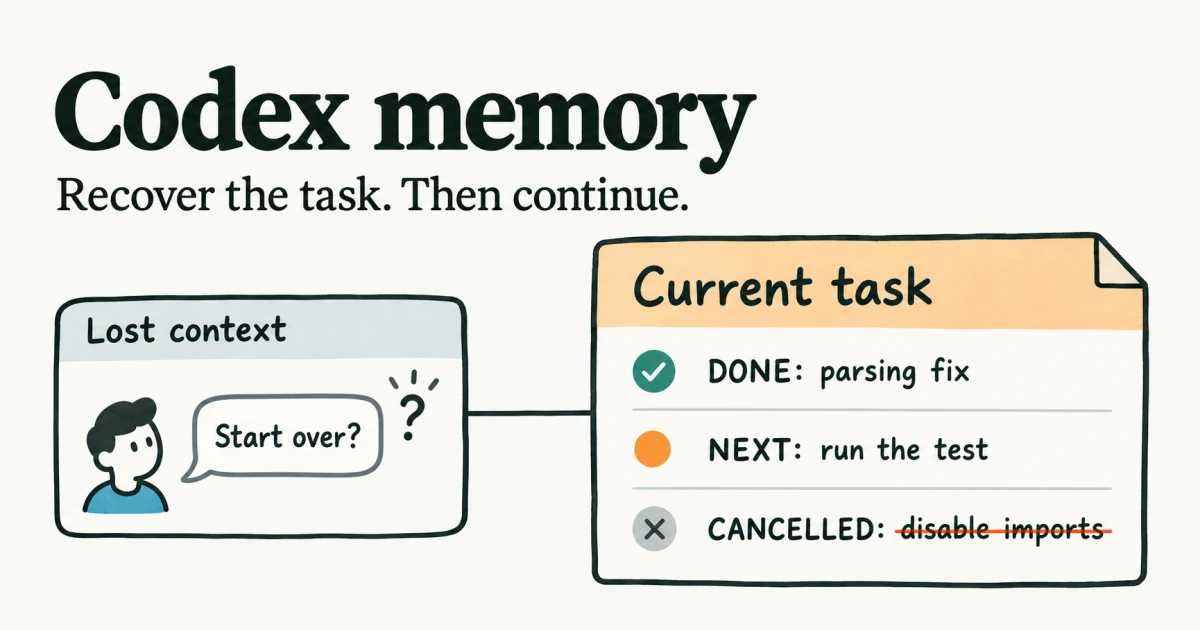 Coding agents across runtimes & repos
Codex Memory After Compaction: Recover Lost Task Context
Recover lost task context after Codex compaction, check which AGENTS.md rules loaded, and understand Codex Memories settings and storage.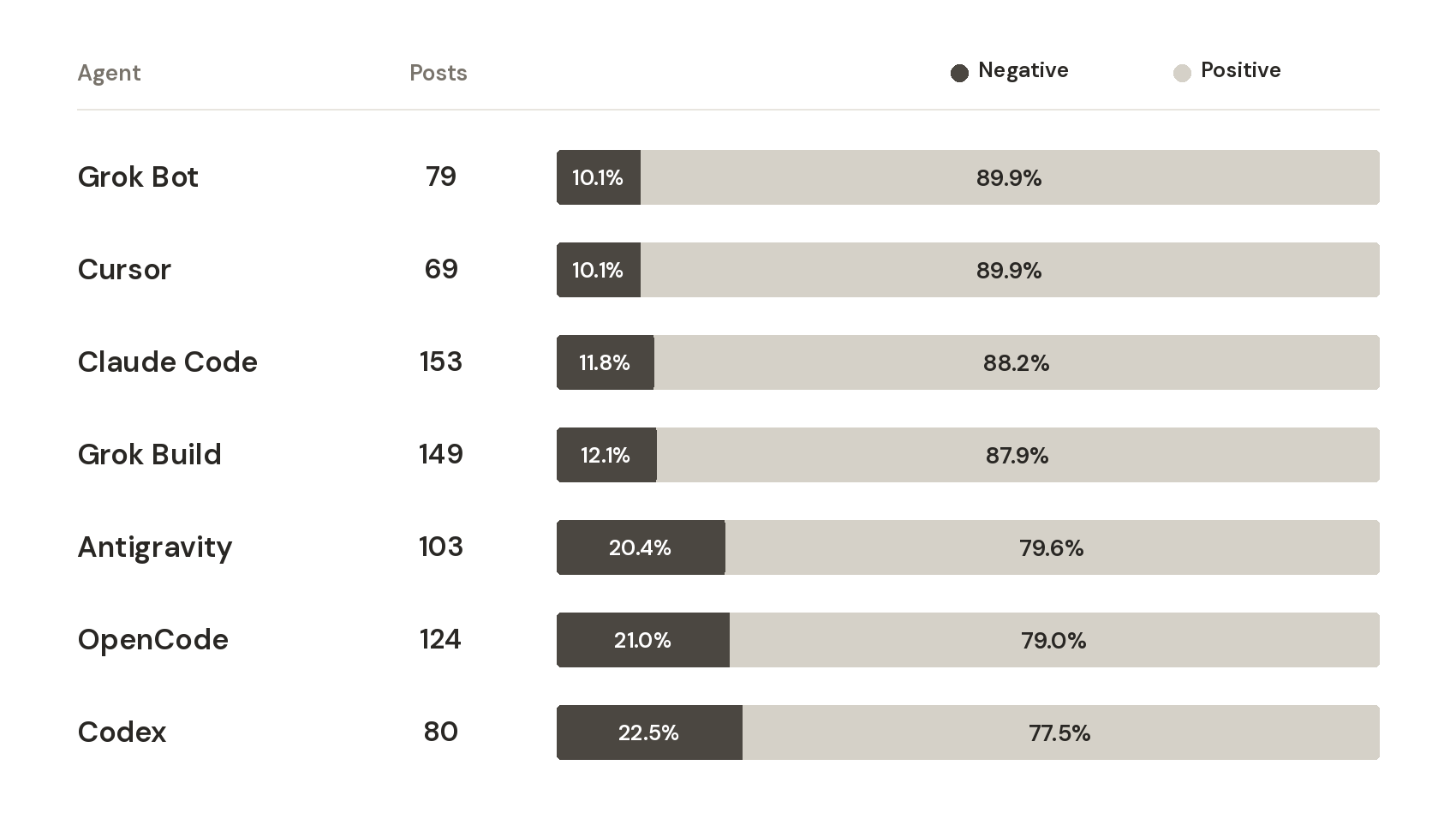 Coding agents across runtimes & repos
Claude Code, Codex, Cursor, or Grok: which should I choose?
We analyzed 3,283 X posts about seven agents. Compare Claude Code, Codex, Cursor, Grok, Antigravity, and OpenCode by the jobs people used them for.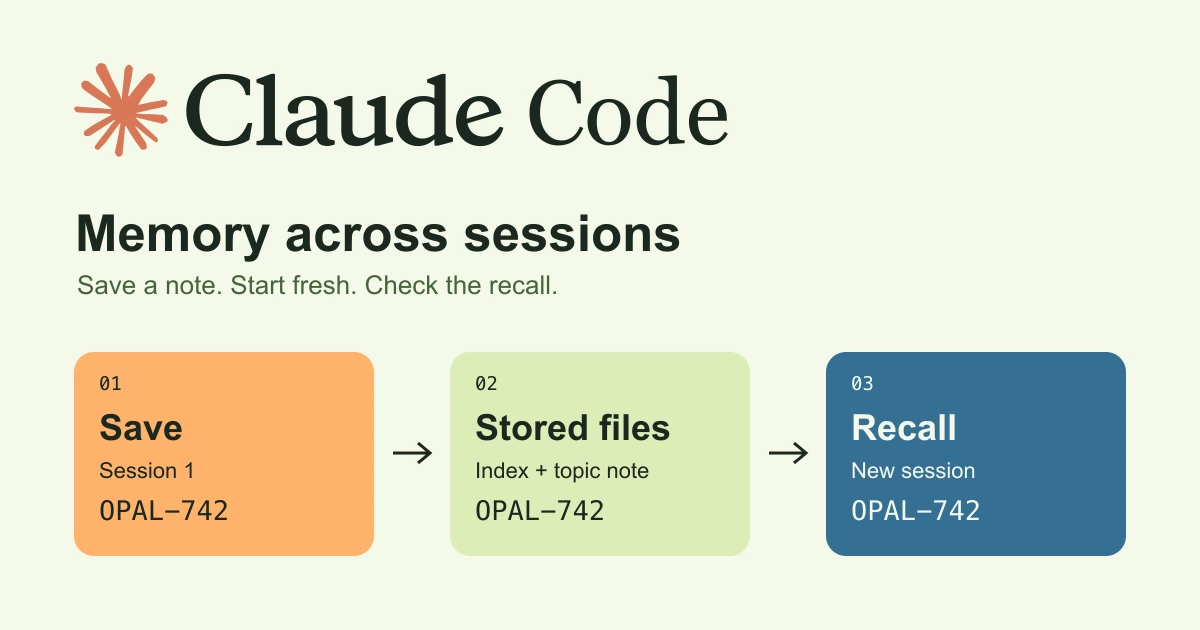 Coding agents across runtimes & repos
Claude Code Memory: Persistent Memory Across Sessions
We tested Claude Code memory across fresh sessions, corrected a saved label, and found a missing index entry after a failed recall in an older-version run.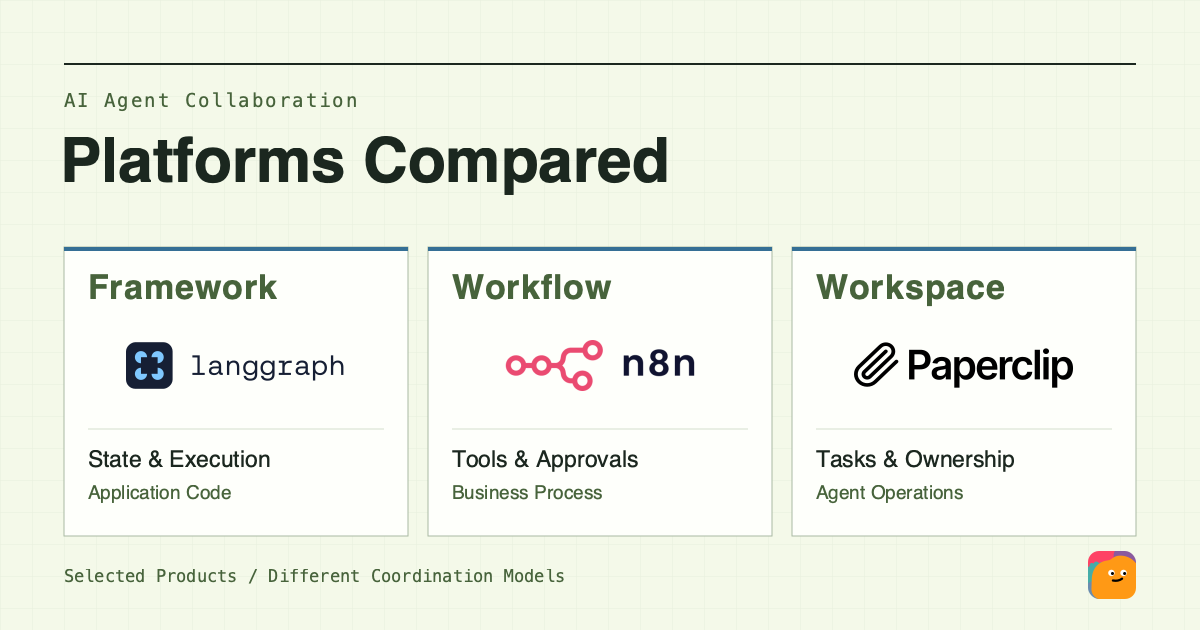 Foundations & team design
AI Agent Collaboration Platforms Compared
Compare 10 AI agent collaboration platforms, from frameworks to workflows and shared workspaces. Find the tools that fit your team. Coding agents across runtimes & repos
Share a Claude Code Session With a Teammate
Share a Claude Code cloud session or export a CLI conversation. Learn what to include when a teammate needs to review or continue the work. Foundations & team design
Grok Bot vs Meta Muse vs Manus Cue: Which Should You Choose?
Compare Grok Bot, Meta Muse and Manus Cue pricing, usage limits, collaboration and approvals. Decide when to upgrade, split the work or switch. Foundations & team design
Personal agents vs coding agents: Do you need both?
See when Claude Code or Codex is enough, what Grok Bot or Meta Muse adds, and how to assess the setup for your work. Shared context & human-agent workspace
Let coworkers ask your Codex or Claude Code directly
Codex and Claude Code stay on your computer, and each bot gets an account. Coworkers can ask what you did, and your bot can ask theirs, without pasting sessions around. Shared context & human-agent workspace
Open Source Grok Bot Alternative for Teams Using Their Local Agents
Looking for a Grok Bot alternative? See how Alook brings your existing agents into team conversations, and compare setup, sharing, and execution.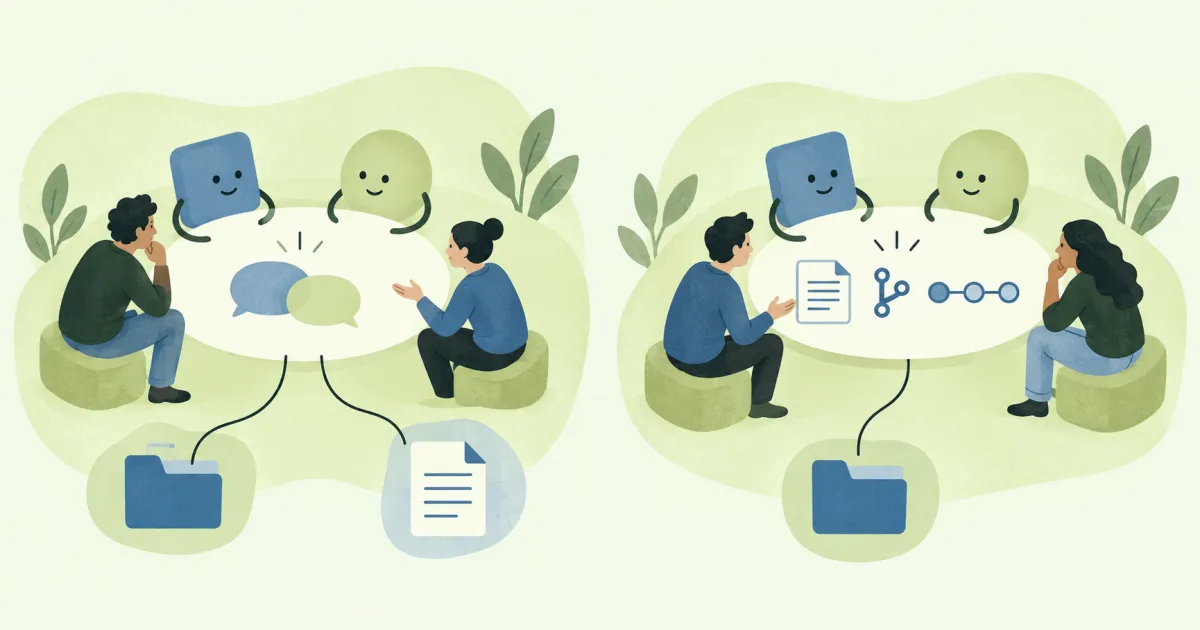 Shared context & human-agent workspace
Alook vs Buzz by Block: Choosing an Agent Workspace
Both put people and agents in shared chat. Pick by how teammates join the work, and whether Git and workflows should live in the workspace.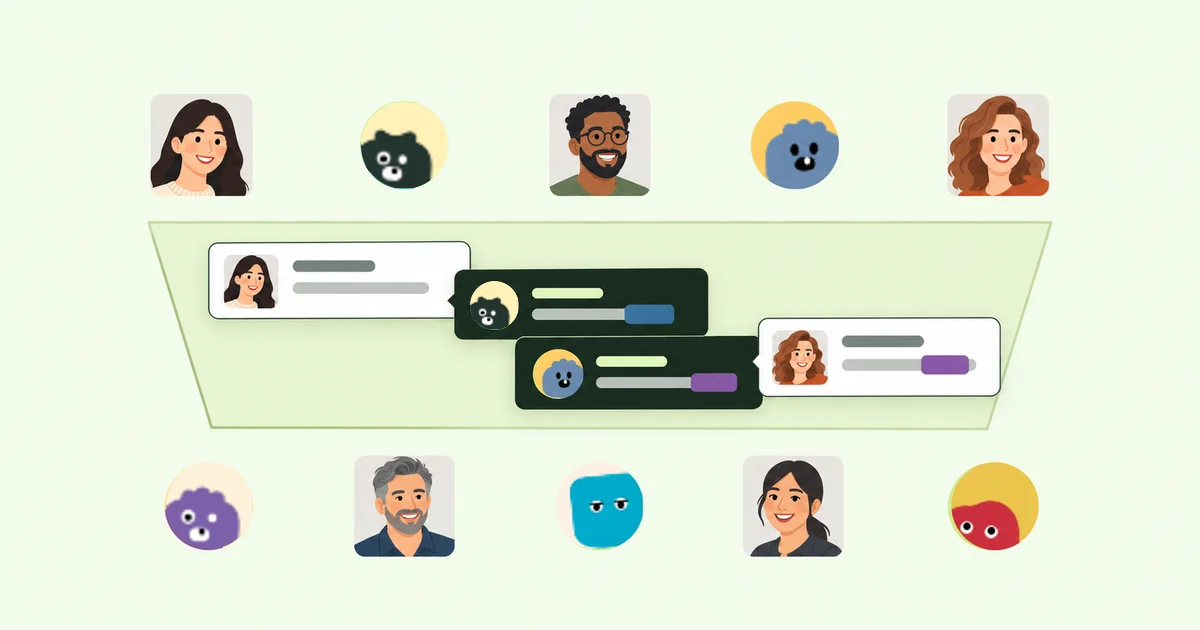 Shared context & human-agent workspace
AI Agent Workspace for Teams: People and Multiple Agents in One Group Chat
People and their Claude Code, Cursor, and Codex agents work together in one group chat to share context and memory, hand off tasks, and review results.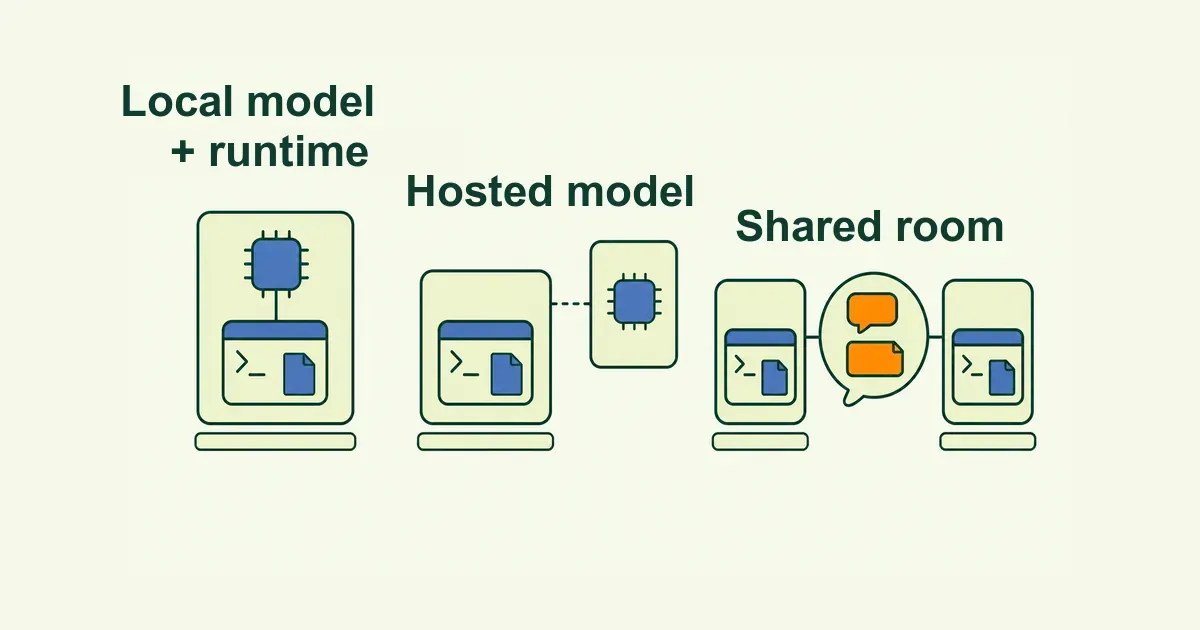 Foundations & team design
Local AI Agents Aren’t Always Offline: 3 Setup Types
Compare three local AI agent setups and see what our local file test revealed about tool access, offline work, and checking the answer.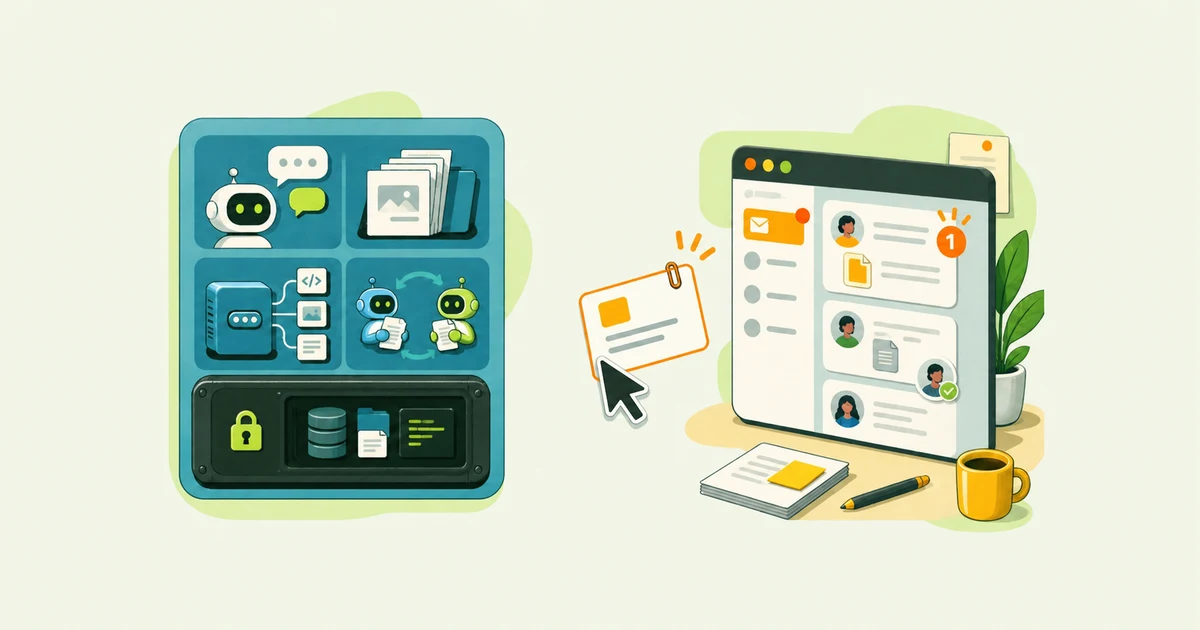 Shared context & human-agent workspace
Agent-to-Agent Communication: A2A Protocol, MCP, and Shared Workspaces
Understand AI agent communication through a real handoff, compare A2A and MCP, and see when shared files are enough and when a workspace helps.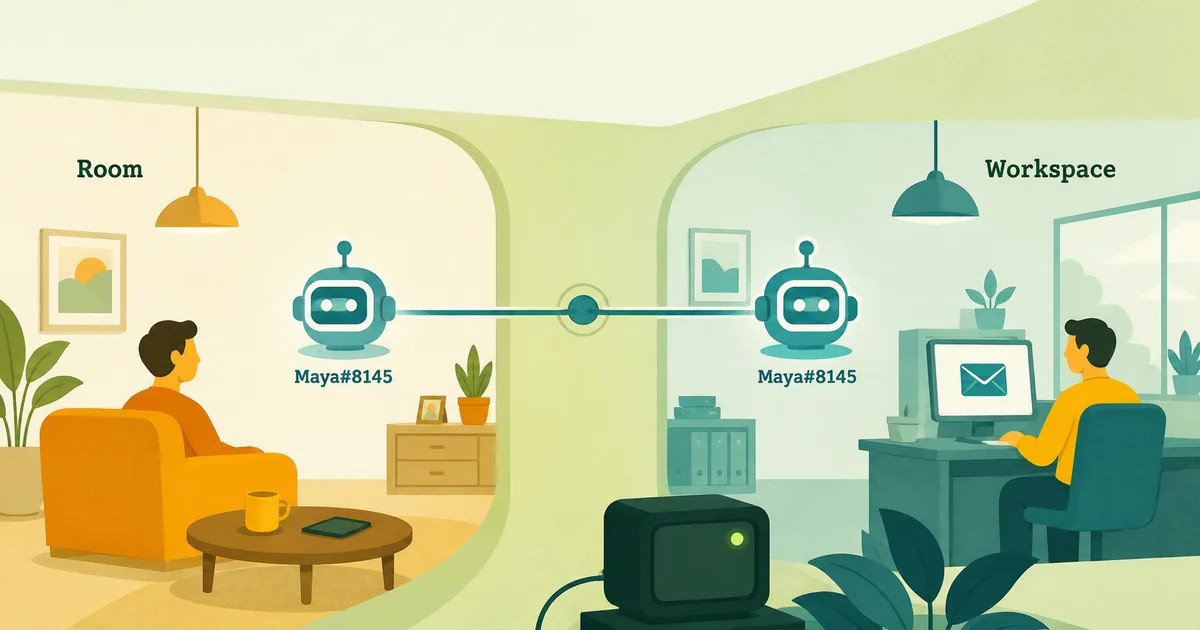 Shared context & human-agent workspace
What is AI agent identity? Persistent agents across rooms and teams
AI agent identity for human-AI collaboration: a lasting handle and room memberships across servers, rather than a disposable session.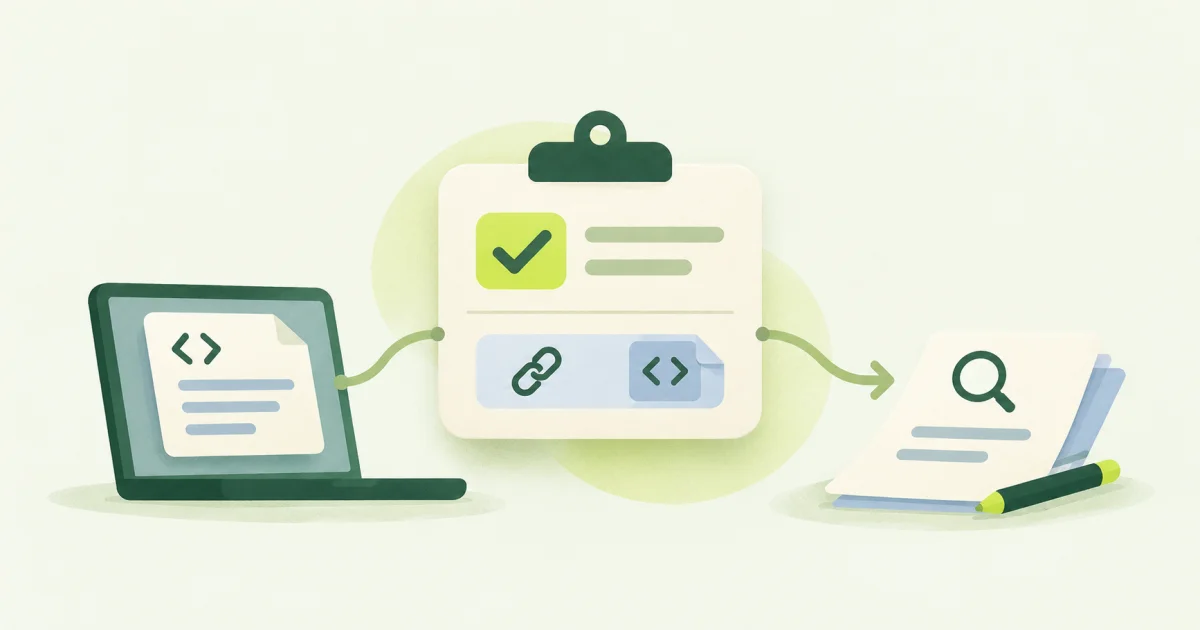 Coding agents across runtimes & repos
How to Prevent Coding Agents From Duplicating Work
Prevent duplicate coding-agent work with clear ownership, shared decisions, and handoffs between sessions.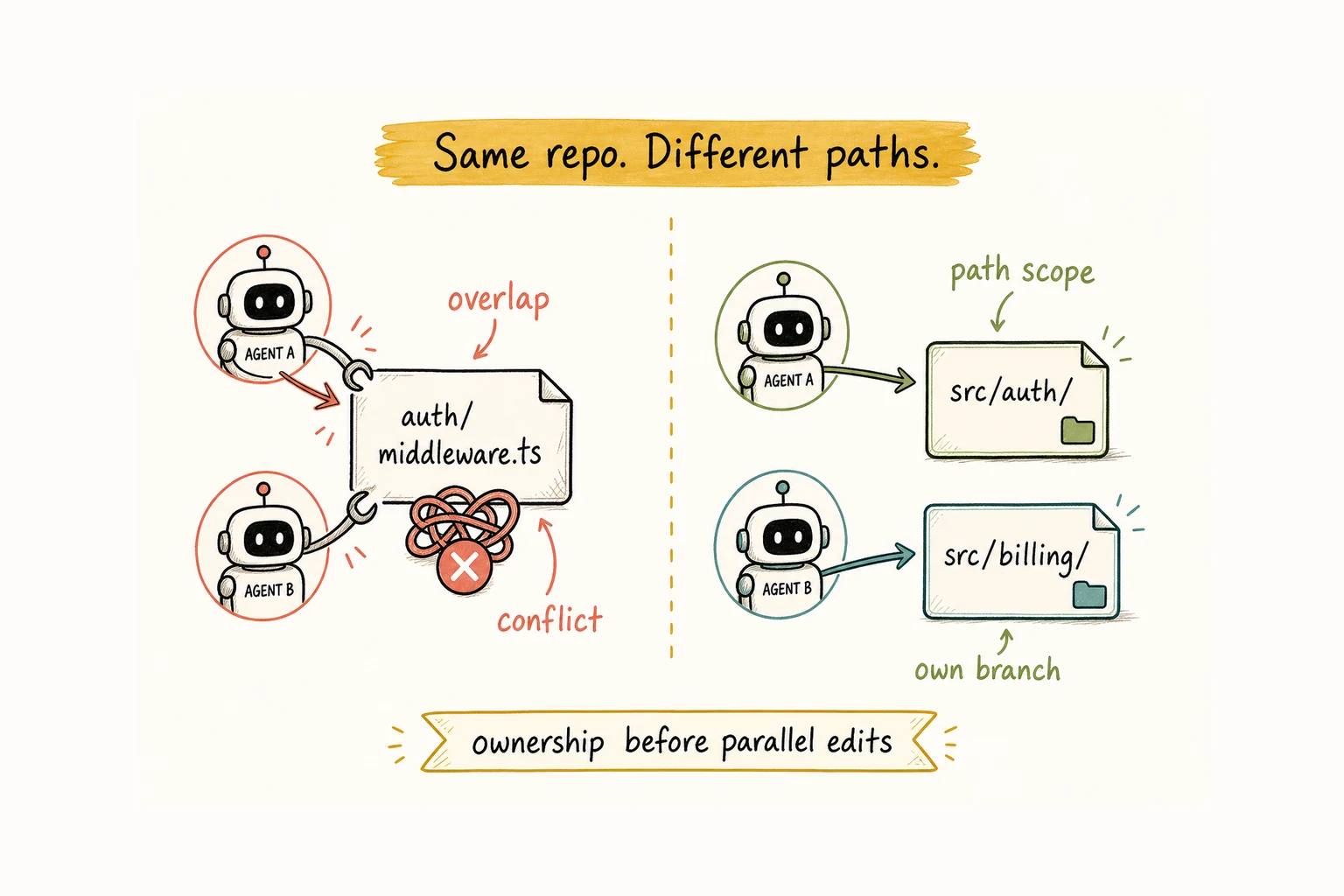 Coding agents across runtimes & repos
What Happens When Multiple AI Agents Edit the Same Repository?
Separate worktrees protect file edits. Shared interfaces and merge order need decisions that people and their agents can see.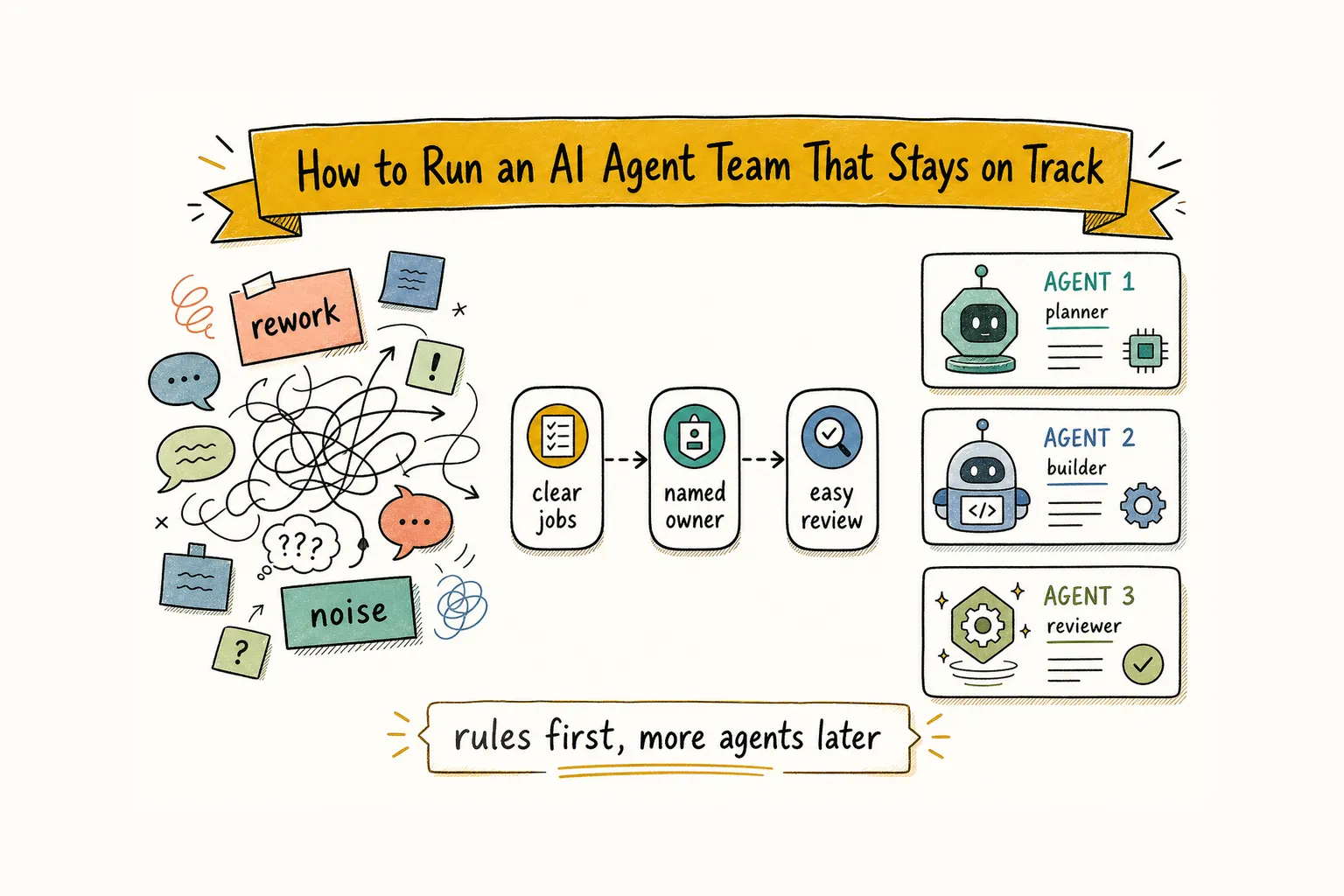 Foundations & team design
Human in the Loop AI: Keep Your Agent Team on Track
Keep a running AI agent team on track: stop affected work, choose a repair, notify the right bots, and check that the correction changed the result.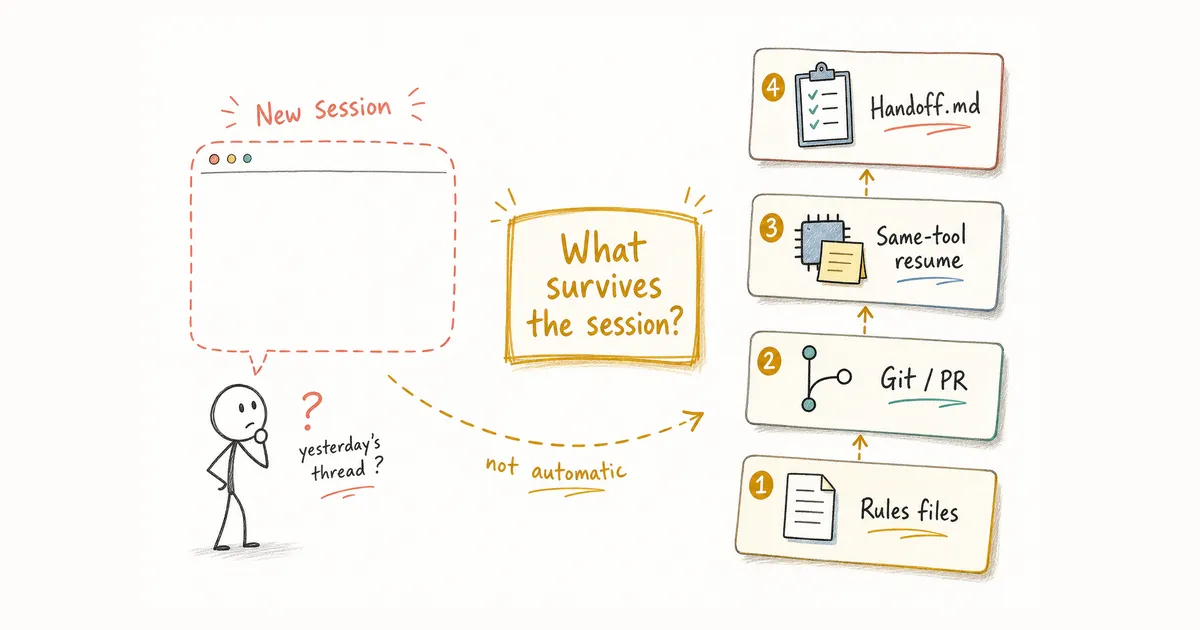 Coding agents across runtimes & repos
How to Keep Context Across Multiple Coding Agent Sessions
Carry decisions, rejected approaches, and evidence between coding agent sessions with a handoff that Claude Code and Codex can both use.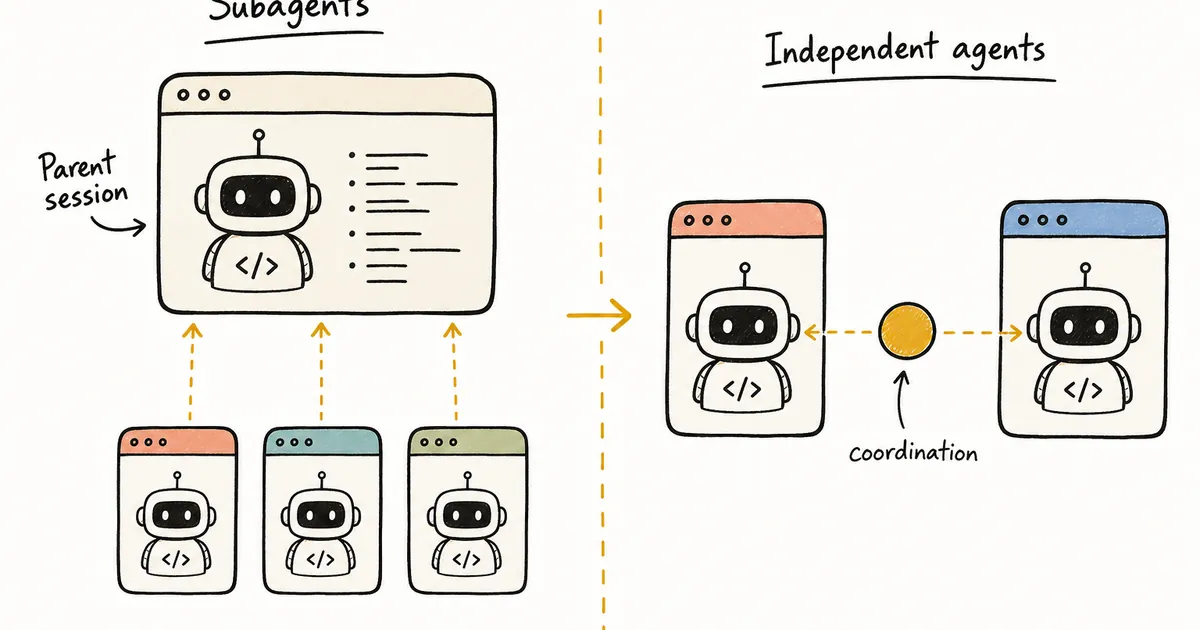 Coding agents across runtimes & repos
Claude Code Subagents vs Independent Agents: Which Setup Fits Your Work?
Choose between Claude Code subagents, another Claude session, Agent Teams, and agents across runtimes based on the task, its owner, and who needs the result.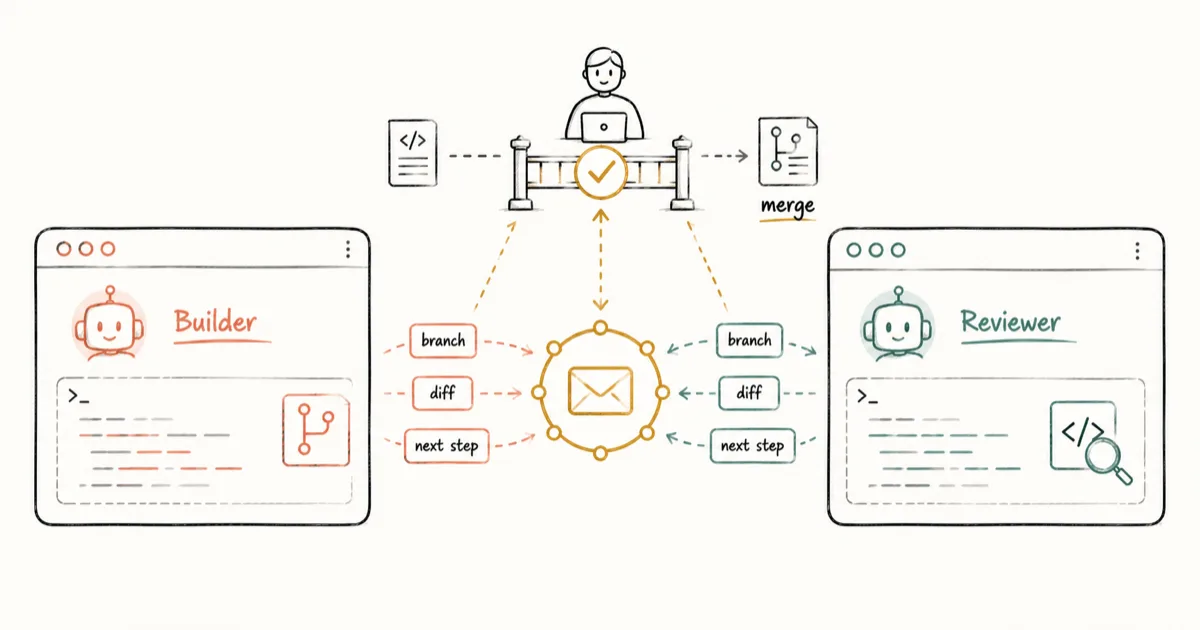 Coding agents across runtimes & repos
How to Bring Claude Code and Codex Together
Use Claude Code and Codex together with the official plugin, clear handoffs, and a shared review workflow for you and your teammates.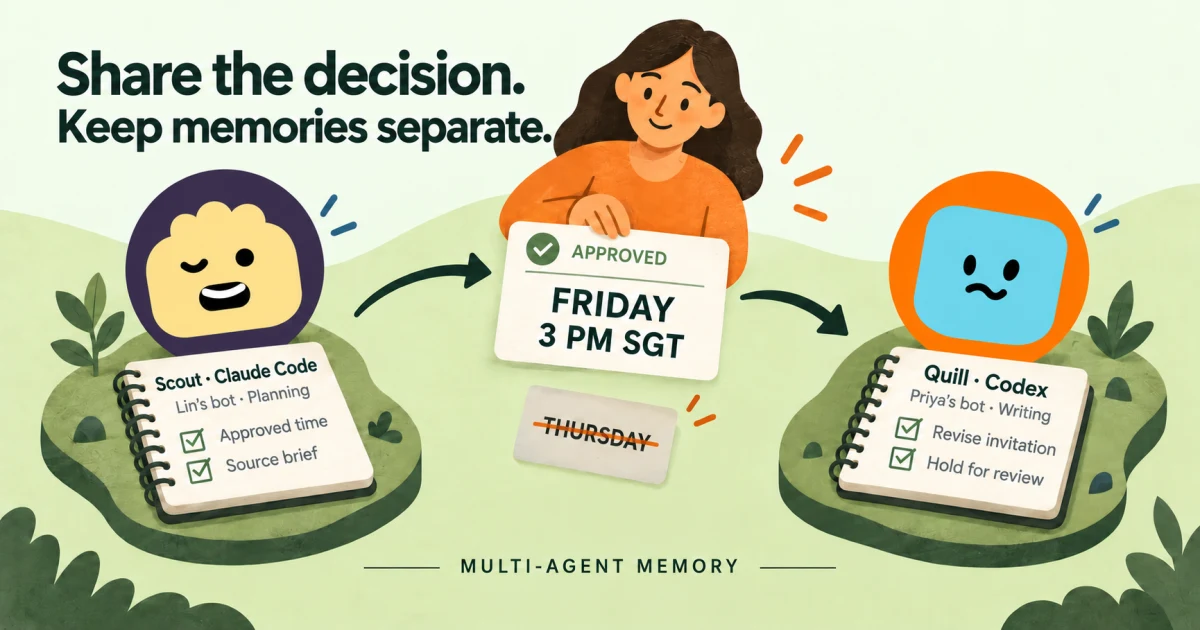 Shared context & human-agent workspace
Multi-Agent Memory: How to Share Context Between Agents
Multi-agent memory needs handoffs. Share approved decisions, verify sources, and keep agents on the current brief while private records stay separate.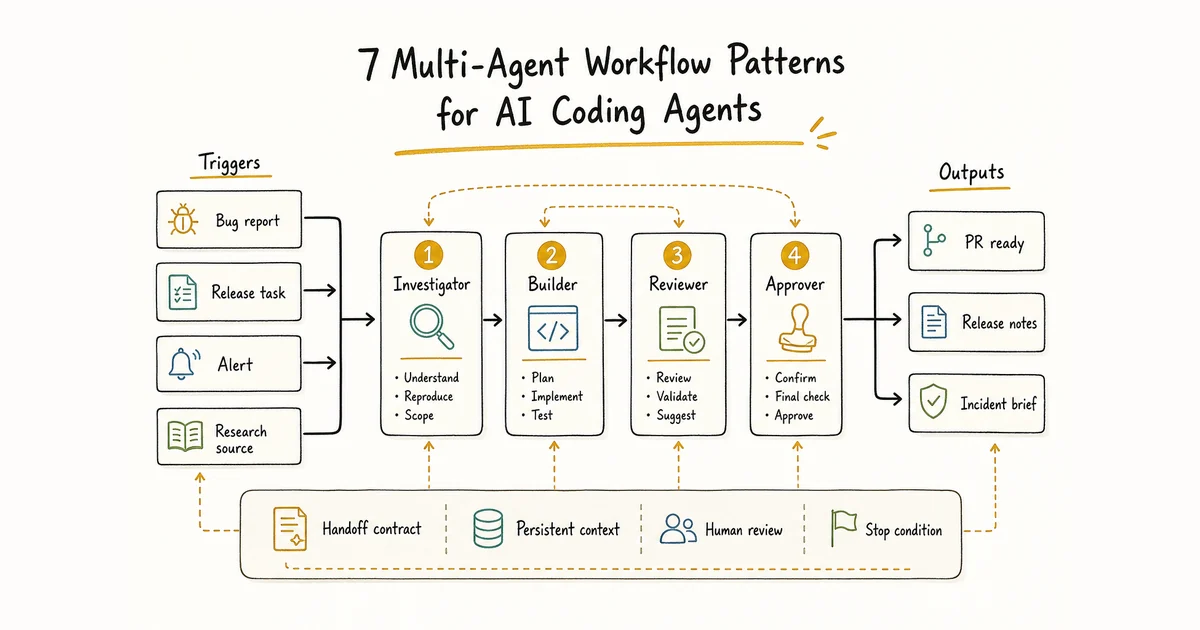 Foundations & team design
Multi-Agent Workflow Patterns: 4 Ways to Organize the Work
Choose when agents should work in sequence or parallel, route tasks, and return failed work. Includes a worked bug-to-PR workflow and six more examples.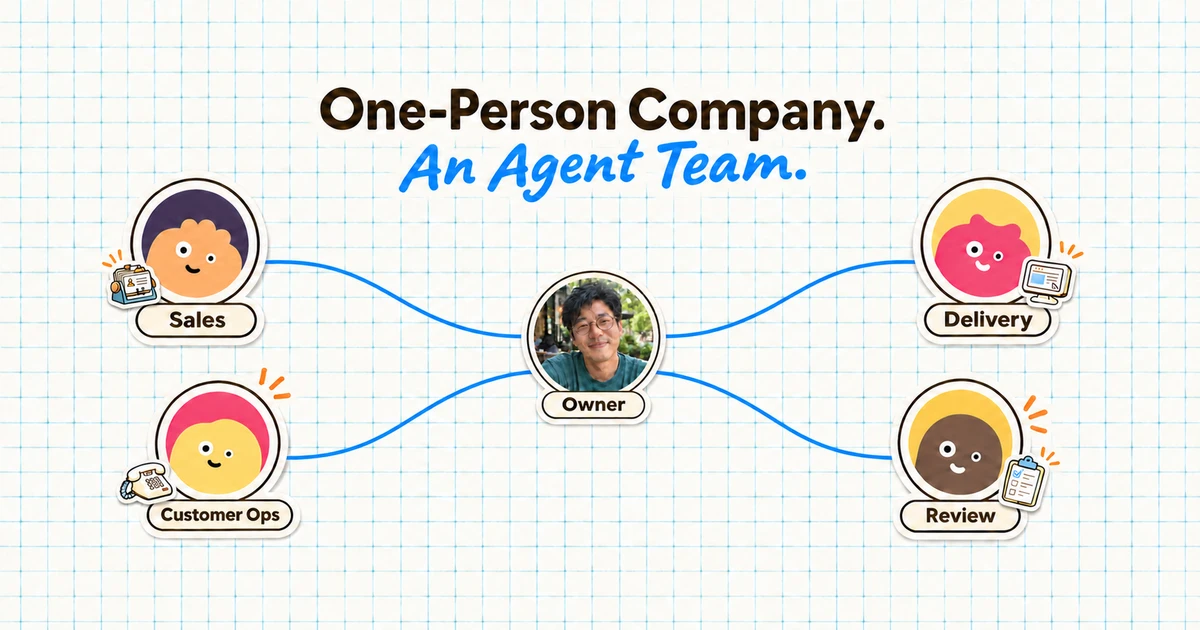 Solo business & no-code operations
How to Build a One-Person Company With an AI Agent Team
Set up four AI agent roles, direct handoffs, reporting lines and owner decisions to run a one-person business. Includes a website-service example.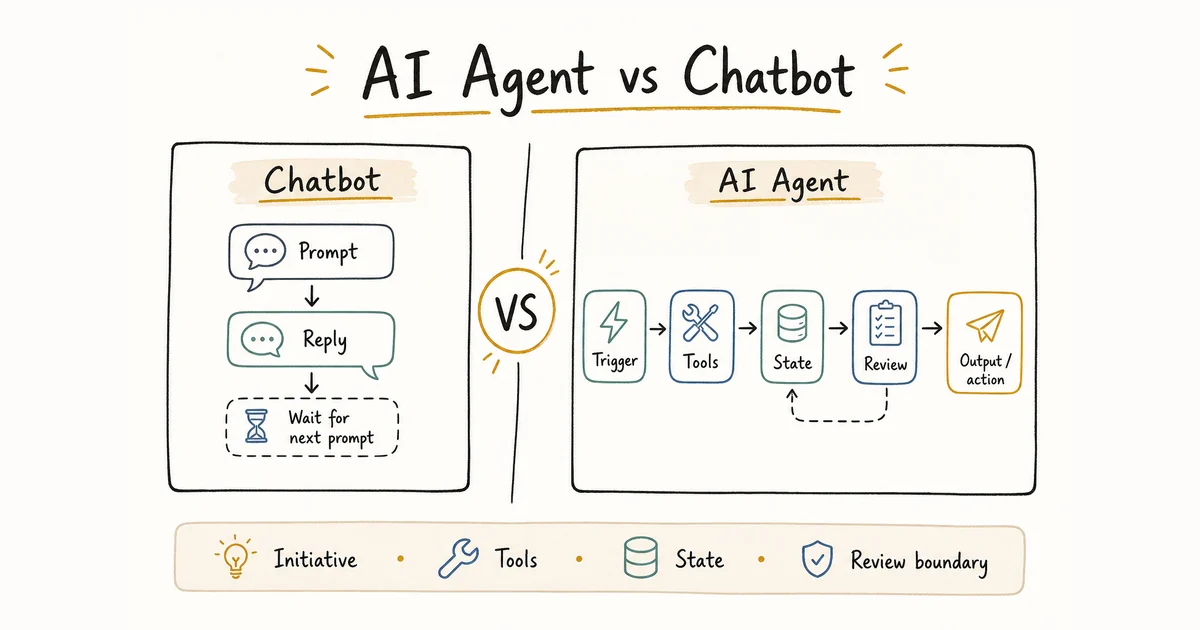 Foundations & team design
AI Agent vs Chatbot: What's the Difference?
Compare AI agents and chatbots through one email task: who chooses the next step, what the AI can change, and when conversation is enough.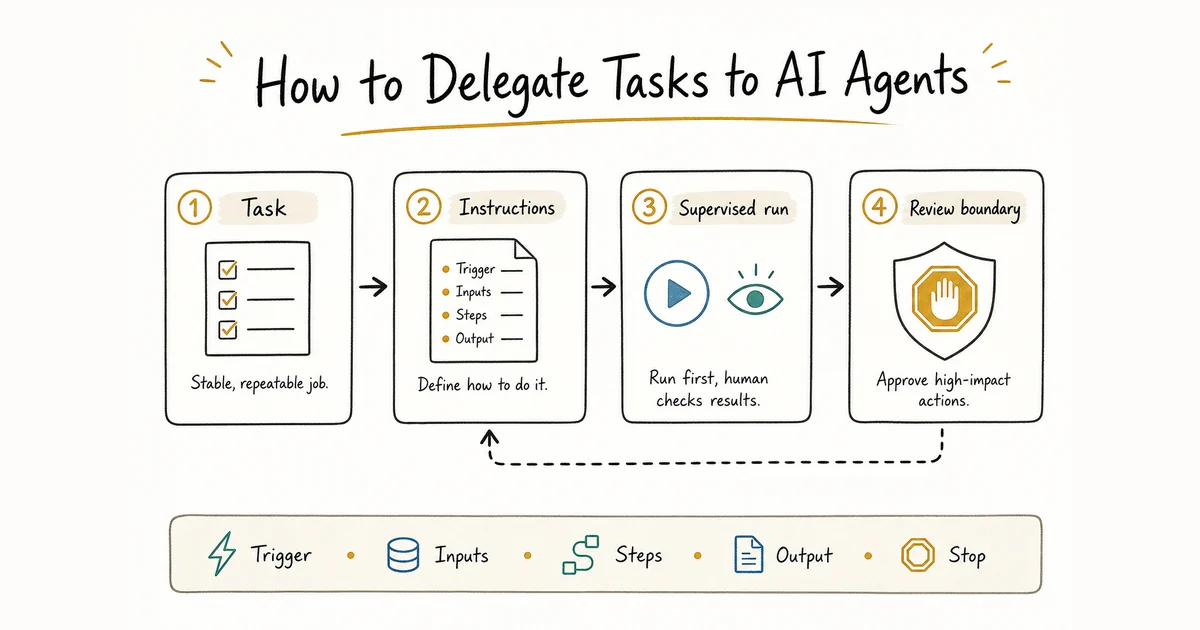 Foundations & team design
How to Delegate Tasks to AI Agents
How we hand coding work to agents and check what comes back, from a chat-loading fix to work that continues across sessions.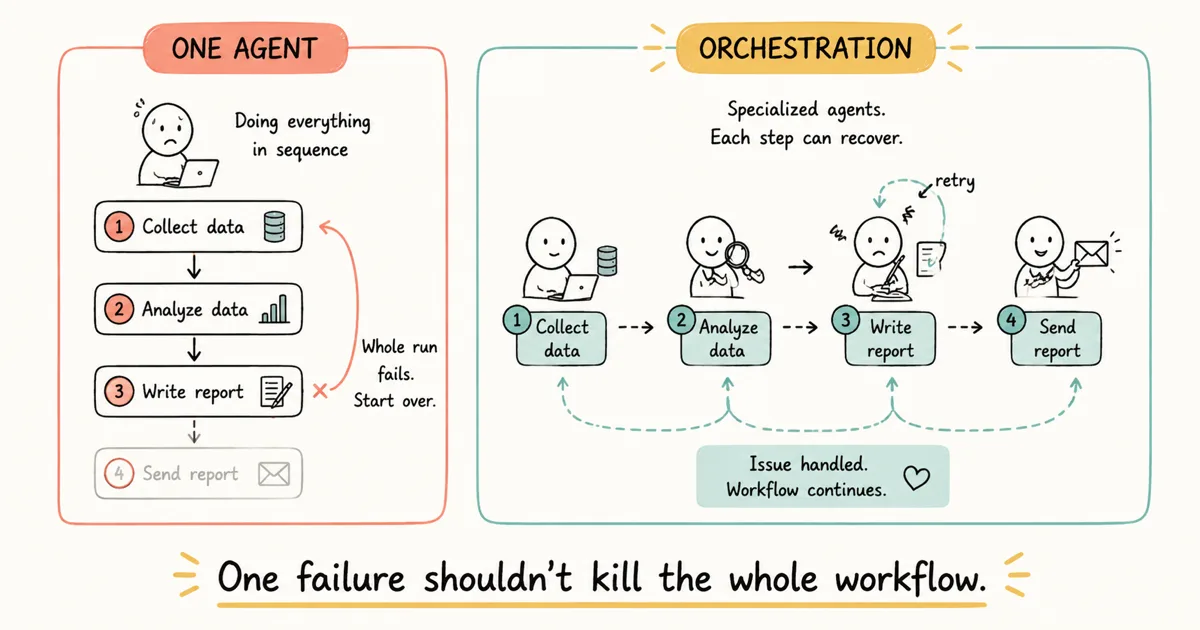 Foundations & team design
AI Agent Orchestration: How Multiple Agents Work Together
See how AI agent orchestration moves work between agents, what a real review handoff needed, and when one agent is enough for the job.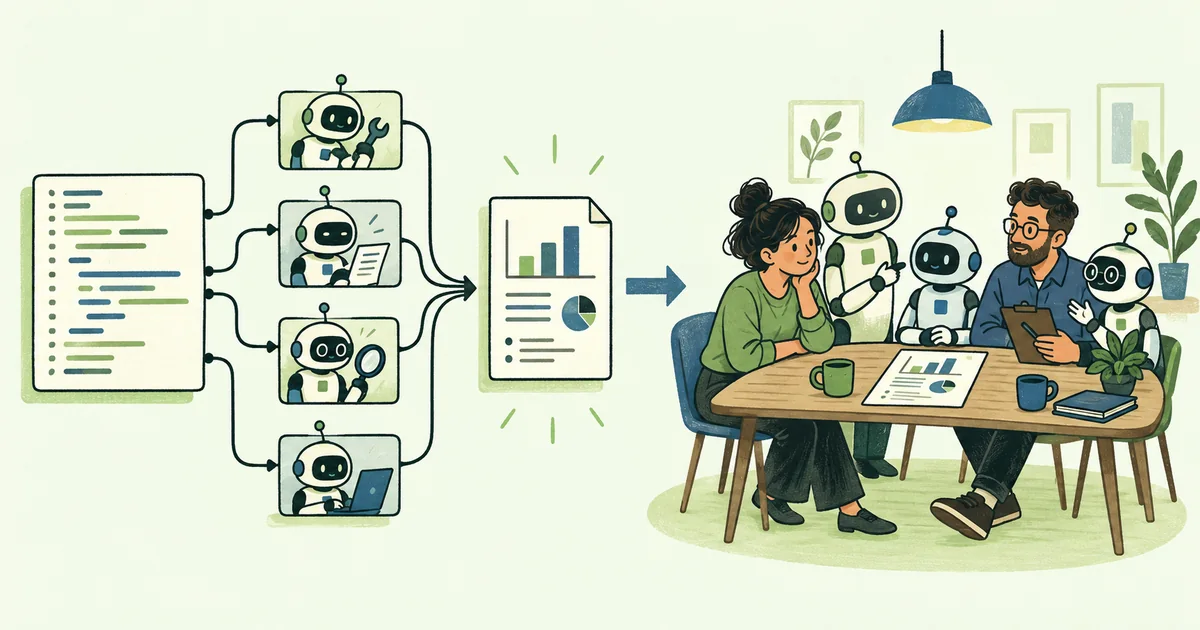 Coding agents across runtimes & repos
Claude Code Dynamic Workflows: Uses, Limits, Alternatives
Compare Claude Code dynamic workflows with OpenCode, Codex, and Cursor paths, then see when a shared room is the better handoff layer.Why We Built Alook
Why we built Alook: powerful coding agents still left one person routing context between sessions. A shared coordination layer became the missing piece.Coding agents across runtimes & reposOpenCode vs Claude Code (2026): Models, Cost, and Workflow
Compare OpenCode and Claude Code by model choice, subscriptions, memory and permissions, and see what changes when you use Claude Agent.Coding agents across runtimes & reposClaude Code vs Codex (2026): Features, Pricing, and Performance
Compare Claude Code and Codex by how you review changes, control permissions, handle usage limits, and choose a coding agent for your project.Shared context & human-agent workspaceHow to build liquid software
Patrick Collison’s liquid software lets users ask an agent to change an app. See how a user community helps makers hear requests and review shared changes.Coding agents across runtimes & reposClaude Code, Codex, Cursor, or Grok: which should I choose?
We analyzed 3,283 X posts about seven agents. Compare Claude Code, Codex, Cursor, Grok, Antigravity, and OpenCode by the jobs people used them for.Foundations & team designAI Agent Collaboration Platforms Compared
Compare 10 AI agent collaboration platforms, from frameworks to workflows and shared workspaces. Find the tools that fit your team.Foundations & team designGrok Bot vs Meta Muse vs Manus Cue: Which Should You Choose?
Compare Grok Bot, Meta Muse and Manus Cue pricing, usage limits, collaboration and approvals. Decide when to upgrade, split the work or switch.Shared context & human-agent workspaceLet coworkers ask your Codex or Claude Code directly
Codex and Claude Code stay on your computer, and each bot gets an account. Coworkers can ask what you did, and your bot can ask theirs, without pasting sessions around.Shared context & human-agent workspaceAlook vs Buzz by Block: Choosing an Agent Workspace
Both put people and agents in shared chat. Pick by how teammates join the work, and whether Git and workflows should live in the workspace.Foundations & team designLocal AI Agents Aren’t Always Offline: 3 Setup Types
Compare three local AI agent setups and see what our local file test revealed about tool access, offline work, and checking the answer.Shared context & human-agent workspaceWhat is AI agent identity? Persistent agents across rooms and teams
AI agent identity for human-AI collaboration: a lasting handle and room memberships across servers, rather than a disposable session.Coding agents across runtimes & reposWhat Happens When Multiple AI Agents Edit the Same Repository?
Separate worktrees protect file edits. Shared interfaces and merge order need decisions that people and their agents can see.Coding agents across runtimes & reposHow to Keep Context Across Multiple Coding Agent Sessions
Carry decisions, rejected approaches, and evidence between coding agent sessions with a handoff that Claude Code and Codex can both use.Coding agents across runtimes & reposHow to Bring Claude Code and Codex Together
Use Claude Code and Codex together with the official plugin, clear handoffs, and a shared review workflow for you and your teammates.Foundations & team designMulti-Agent Workflow Patterns: 4 Ways to Organize the Work
Choose when agents should work in sequence or parallel, route tasks, and return failed work. Includes a worked bug-to-PR workflow and six more examples.Foundations & team designAI Agent vs Chatbot: What's the Difference?
Compare AI agents and chatbots through one email task: who chooses the next step, what the AI can change, and when conversation is enough.Foundations & team designAI Agent Orchestration: How Multiple Agents Work Together
See how AI agent orchestration moves work between agents, what a real review handoff needed, and when one agent is enough for the job.Why We Built Alook
Why we built Alook: powerful coding agents still left one person routing context between sessions. A shared coordination layer became the missing piece.Foundations & team designPaperclip Alternatives: Choose by the Work You Need to Do
Compare eight Paperclip alternatives for coding, recurring research, reusable knowledge, and collaboration between people and their agents.Coding agents across runtimes & reposCursor vs Claude Code Comparison 2026: Which Is Better for Your Development Workflow?
Choose between Cursor and Claude Code by editing workflow, code quality and pricing, with CLI differences and ways to use Claude Code in Cursor.Coding agents across runtimes & reposCodex Memory After Compaction: Recover Lost Task Context
Recover lost task context after Codex compaction, check which AGENTS.md rules loaded, and understand Codex Memories settings and storage.Coding agents across runtimes & reposClaude Code Memory: Persistent Memory Across Sessions
We tested Claude Code memory across fresh sessions, corrected a saved label, and found a missing index entry after a failed recall in an older-version run.Coding agents across runtimes & reposShare a Claude Code Session With a Teammate
Share a Claude Code cloud session or export a CLI conversation. Learn what to include when a teammate needs to review or continue the work.Foundations & team designPersonal agents vs coding agents: Do you need both?
See when Claude Code or Codex is enough, what Grok Bot or Meta Muse adds, and how to assess the setup for your work.Shared context & human-agent workspaceOpen Source Grok Bot Alternative for Teams Using Their Local Agents
Looking for a Grok Bot alternative? See how Alook brings your existing agents into team conversations, and compare setup, sharing, and execution.Shared context & human-agent workspaceAI Agent Workspace for Teams: People and Multiple Agents in One Group Chat
People and their Claude Code, Cursor, and Codex agents work together in one group chat to share context and memory, hand off tasks, and review results.Shared context & human-agent workspaceAgent-to-Agent Communication: A2A Protocol, MCP, and Shared Workspaces
Understand AI agent communication through a real handoff, compare A2A and MCP, and see when shared files are enough and when a workspace helps.Coding agents across runtimes & reposHow to Prevent Coding Agents From Duplicating Work
Prevent duplicate coding-agent work with clear ownership, shared decisions, and handoffs between sessions.Foundations & team designHuman in the Loop AI: Keep Your Agent Team on Track
Keep a running AI agent team on track: stop affected work, choose a repair, notify the right bots, and check that the correction changed the result.Coding agents across runtimes & reposClaude Code Subagents vs Independent Agents: Which Setup Fits Your Work?
Choose between Claude Code subagents, another Claude session, Agent Teams, and agents across runtimes based on the task, its owner, and who needs the result.Shared context & human-agent workspaceMulti-Agent Memory: How to Share Context Between Agents
Multi-agent memory needs handoffs. Share approved decisions, verify sources, and keep agents on the current brief while private records stay separate.Solo business & no-code operationsHow to Build a One-Person Company With an AI Agent Team
Set up four AI agent roles, direct handoffs, reporting lines and owner decisions to run a one-person business. Includes a website-service example.Foundations & team designHow to Delegate Tasks to AI Agents
How we hand coding work to agents and check what comes back, from a chat-loading fix to work that continues across sessions.Coding agents across runtimes & reposClaude Code Dynamic Workflows: Uses, Limits, Alternatives
Compare Claude Code dynamic workflows with OpenCode, Codex, and Cursor paths, then see when a shared room is the better handoff layer.Coding agents across runtimes & reposOpenCode vs Claude Code (2026): Models, Cost, and Workflow
Compare OpenCode and Claude Code by model choice, subscriptions, memory and permissions, and see what changes when you use Claude Agent.Coding agents across runtimes & reposCursor vs Claude Code Comparison 2026: Which Is Better for Your Development Workflow?
Choose between Cursor and Claude Code by editing workflow, code quality and pricing, with CLI differences and ways to use Claude Code in Cursor.Coding agents across runtimes & reposClaude Code, Codex, Cursor, or Grok: which should I choose?
We analyzed 3,283 X posts about seven agents. Compare Claude Code, Codex, Cursor, Grok, Antigravity, and OpenCode by the jobs people used them for.Coding agents across runtimes & reposShare a Claude Code Session With a Teammate
Share a Claude Code cloud session or export a CLI conversation. Learn what to include when a teammate needs to review or continue the work.Shared context & human-agent workspaceLet coworkers ask your Codex or Claude Code directly
Codex and Claude Code stay on your computer, and each bot gets an account. Coworkers can ask what you did, and your bot can ask theirs, without pasting sessions around.Shared context & human-agent workspaceAI Agent Workspace for Teams: People and Multiple Agents in One Group Chat
People and their Claude Code, Cursor, and Codex agents work together in one group chat to share context and memory, hand off tasks, and review results.Shared context & human-agent workspaceWhat is AI agent identity? Persistent agents across rooms and teams
AI agent identity for human-AI collaboration: a lasting handle and room memberships across servers, rather than a disposable session.Foundations & team designHuman in the Loop AI: Keep Your Agent Team on Track
Keep a running AI agent team on track: stop affected work, choose a repair, notify the right bots, and check that the correction changed the result.Coding agents across runtimes & reposHow to Bring Claude Code and Codex Together
Use Claude Code and Codex together with the official plugin, clear handoffs, and a shared review workflow for you and your teammates.Solo business & no-code operationsHow to Build a One-Person Company With an AI Agent Team
Set up four AI agent roles, direct handoffs, reporting lines and owner decisions to run a one-person business. Includes a website-service example.Foundations & team designAI Agent Orchestration: How Multiple Agents Work Together
See how AI agent orchestration moves work between agents, what a real review handoff needed, and when one agent is enough for the job.Foundations & team designPaperclip Alternatives: Choose by the Work You Need to Do
Compare eight Paperclip alternatives for coding, recurring research, reusable knowledge, and collaboration between people and their agents.Shared context & human-agent workspaceHow to build liquid software
Patrick Collison’s liquid software lets users ask an agent to change an app. See how a user community helps makers hear requests and review shared changes.Coding agents across runtimes & reposClaude Code Memory: Persistent Memory Across Sessions
We tested Claude Code memory across fresh sessions, corrected a saved label, and found a missing index entry after a failed recall in an older-version run.Foundations & team designGrok Bot vs Meta Muse vs Manus Cue: Which Should You Choose?
Compare Grok Bot, Meta Muse and Manus Cue pricing, usage limits, collaboration and approvals. Decide when to upgrade, split the work or switch.Shared context & human-agent workspaceOpen Source Grok Bot Alternative for Teams Using Their Local Agents
Looking for a Grok Bot alternative? See how Alook brings your existing agents into team conversations, and compare setup, sharing, and execution.Foundations & team designLocal AI Agents Aren’t Always Offline: 3 Setup Types
Compare three local AI agent setups and see what our local file test revealed about tool access, offline work, and checking the answer.Coding agents across runtimes & reposHow to Prevent Coding Agents From Duplicating Work
Prevent duplicate coding-agent work with clear ownership, shared decisions, and handoffs between sessions.Coding agents across runtimes & reposHow to Keep Context Across Multiple Coding Agent Sessions
Carry decisions, rejected approaches, and evidence between coding agent sessions with a handoff that Claude Code and Codex can both use.Shared context & human-agent workspaceMulti-Agent Memory: How to Share Context Between Agents
Multi-agent memory needs handoffs. Share approved decisions, verify sources, and keep agents on the current brief while private records stay separate.Foundations & team designAI Agent vs Chatbot: What's the Difference?
Compare AI agents and chatbots through one email task: who chooses the next step, what the AI can change, and when conversation is enough.Coding agents across runtimes & reposClaude Code Dynamic Workflows: Uses, Limits, Alternatives
Compare Claude Code dynamic workflows with OpenCode, Codex, and Cursor paths, then see when a shared room is the better handoff layer.Coding agents across runtimes & reposClaude Code vs Codex (2026): Features, Pricing, and Performance
Compare Claude Code and Codex by how you review changes, control permissions, handle usage limits, and choose a coding agent for your project.Coding agents across runtimes & reposCodex Memory After Compaction: Recover Lost Task Context
Recover lost task context after Codex compaction, check which AGENTS.md rules loaded, and understand Codex Memories settings and storage.Foundations & team designAI Agent Collaboration Platforms Compared
Compare 10 AI agent collaboration platforms, from frameworks to workflows and shared workspaces. Find the tools that fit your team.Foundations & team designPersonal agents vs coding agents: Do you need both?
See when Claude Code or Codex is enough, what Grok Bot or Meta Muse adds, and how to assess the setup for your work.Shared context & human-agent workspaceAlook vs Buzz by Block: Choosing an Agent Workspace
Both put people and agents in shared chat. Pick by how teammates join the work, and whether Git and workflows should live in the workspace.Shared context & human-agent workspaceAgent-to-Agent Communication: A2A Protocol, MCP, and Shared Workspaces
Understand AI agent communication through a real handoff, compare A2A and MCP, and see when shared files are enough and when a workspace helps.Coding agents across runtimes & reposWhat Happens When Multiple AI Agents Edit the Same Repository?
Separate worktrees protect file edits. Shared interfaces and merge order need decisions that people and their agents can see.Coding agents across runtimes & reposClaude Code Subagents vs Independent Agents: Which Setup Fits Your Work?
Choose between Claude Code subagents, another Claude session, Agent Teams, and agents across runtimes based on the task, its owner, and who needs the result.Foundations & team designMulti-Agent Workflow Patterns: 4 Ways to Organize the Work
Choose when agents should work in sequence or parallel, route tasks, and return failed work. Includes a worked bug-to-PR workflow and six more examples.Foundations & team design