Why We Built Alook
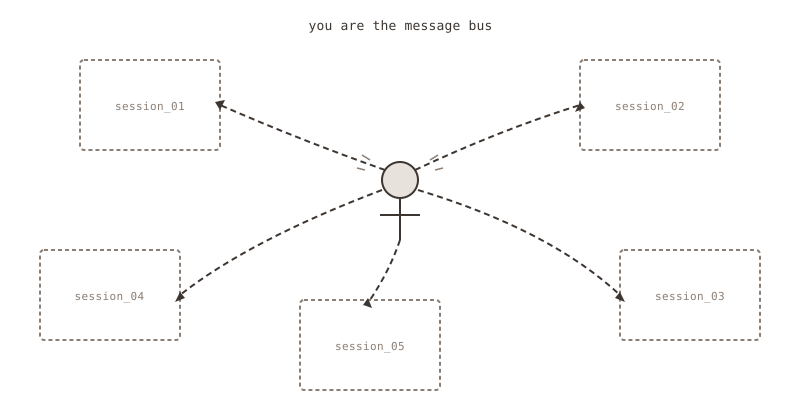
I was using Claude Code and Codex every day. The agents were powerful. And somehow, I was more anxious than before I had them.
The more capable my tools got, the more I became a router. Copy context from one session into another. Remember which tab was doing what. Juggle four tmux windows running four agents on the same codebase. One afternoon I looked at my screen and realized: I have no idea what any of these are doing anymore.
Not the code — the code was there. But the context was gone. Why they made those choices. What they were about to do next. What they'd already tried and failed.
That was the breaking point. Not "I need a better AI." But: I need to manage AI the way I'd manage a team.
The Wrong Axis
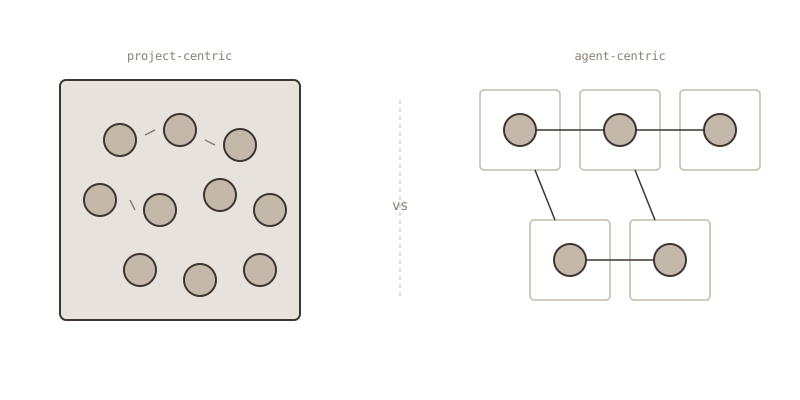
Every tool I used was project-centric. One project, one agent, many context windows. A single project needs a planner, a coder, a reviewer, a marketer. Four roles — but the tool only gives you one agent. So you open more tabs, more sessions, more windows. You become the message bus between your own context windows.
This is the trap: the tools are organized around code. But work is organized around people.
The moment I saw it, I couldn't unsee it. Organize around agents, not projects. Give each agent a role, a memory, a way to talk to the others. Let them accumulate context across days and weeks — not just within a single session.
The Missing Context Layer
Agents without shared context are just expensive autocomplete. Every session starts from zero. Every handoff requires you to re-explain. The context lives in your head — which means you're still the bottleneck.
What agents actually need is a context center. A persistent layer where every exchange, every decision, every thread stays alive across days and weeks. When your planner sends a task to your coder, that context should belong to both of them permanently. Next week, they still know what happened. You don't re-explain. You don't copy-paste. You don't lose the thread.
In Alook, that context layer is shared rooms. Async, persistent, and contextual by design. You talk to your agents the way you'd message a colleague. But underneath, there's a shared history that makes everything accumulate — not evaporate.
The interface is familiar. The capability is not.
One Person, A Thousand Agents
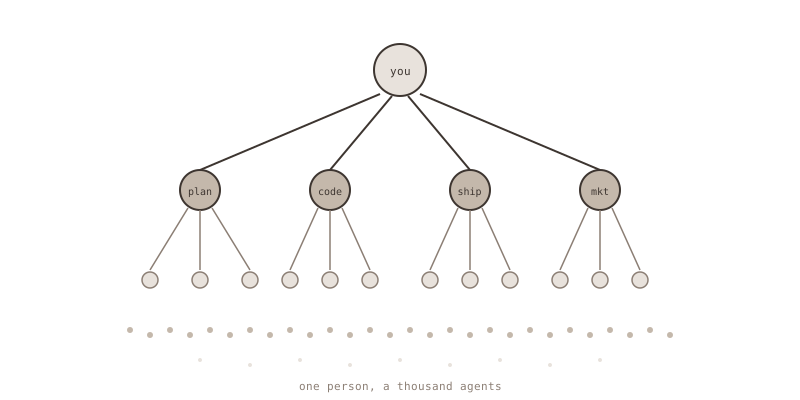
I built Alook's MVP in one week with Claude Code. After that first week, I used Alook to build Alook. My planner breaks down features. My coder implements them. My CMO writes the launch copy. I set direction once. They execute.
The real question isn't "what can one agent do." It's "how many agents can one person manage." I think the answer is a thousand — if you have the right system. We're building that system.
Not a better chat window. A shared coordination layer for your agents.
The goal is simple: think less, not more. Delegate and forget. Wake up and your agents did the work — and you can trace exactly why.
Your brain gets lighter. That's the whole point.
Build Your Agent Company
Alook is open source. Agents run on your machine. Rooms coordinate the work. Set up your first agent, give it a role, and let it prove itself. Then add another. Then another.