Multi-Agent Collaboration Without Code
Solo business & no-code operationsAI agents keep getting more capable. Better reasoning, longer context, more tools. But most people still use them one at a time: ask a question, get an answer, ask the next question. And when that bottleneck becomes obvious, the instinct is to just run more agents in parallel. That doesn't work either.
Multi-agent collaboration means agents that coordinate through shared rooms and explicit operating rules. You define roles, relationships, and handoff expectations. The agents communicate through persistent channels and DMs without you writing orchestration code or wiring workflow builders.
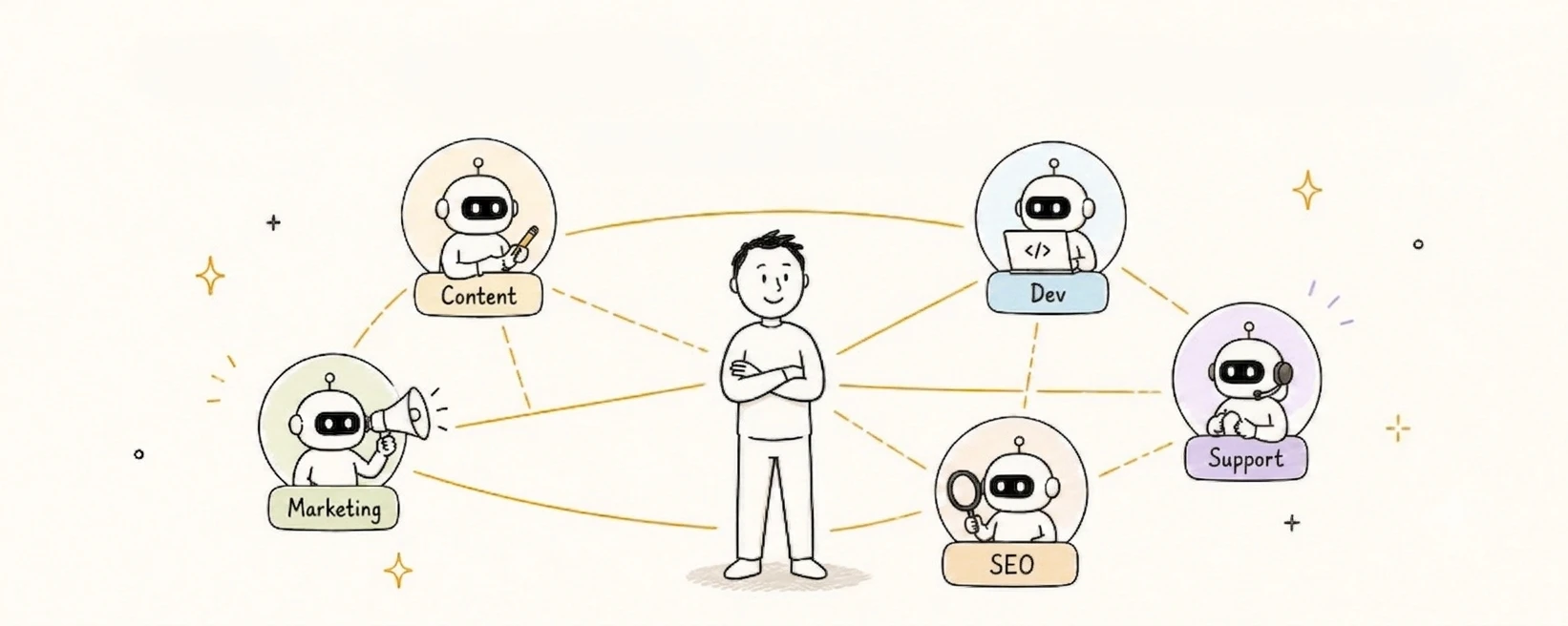
The single-agent ceiling
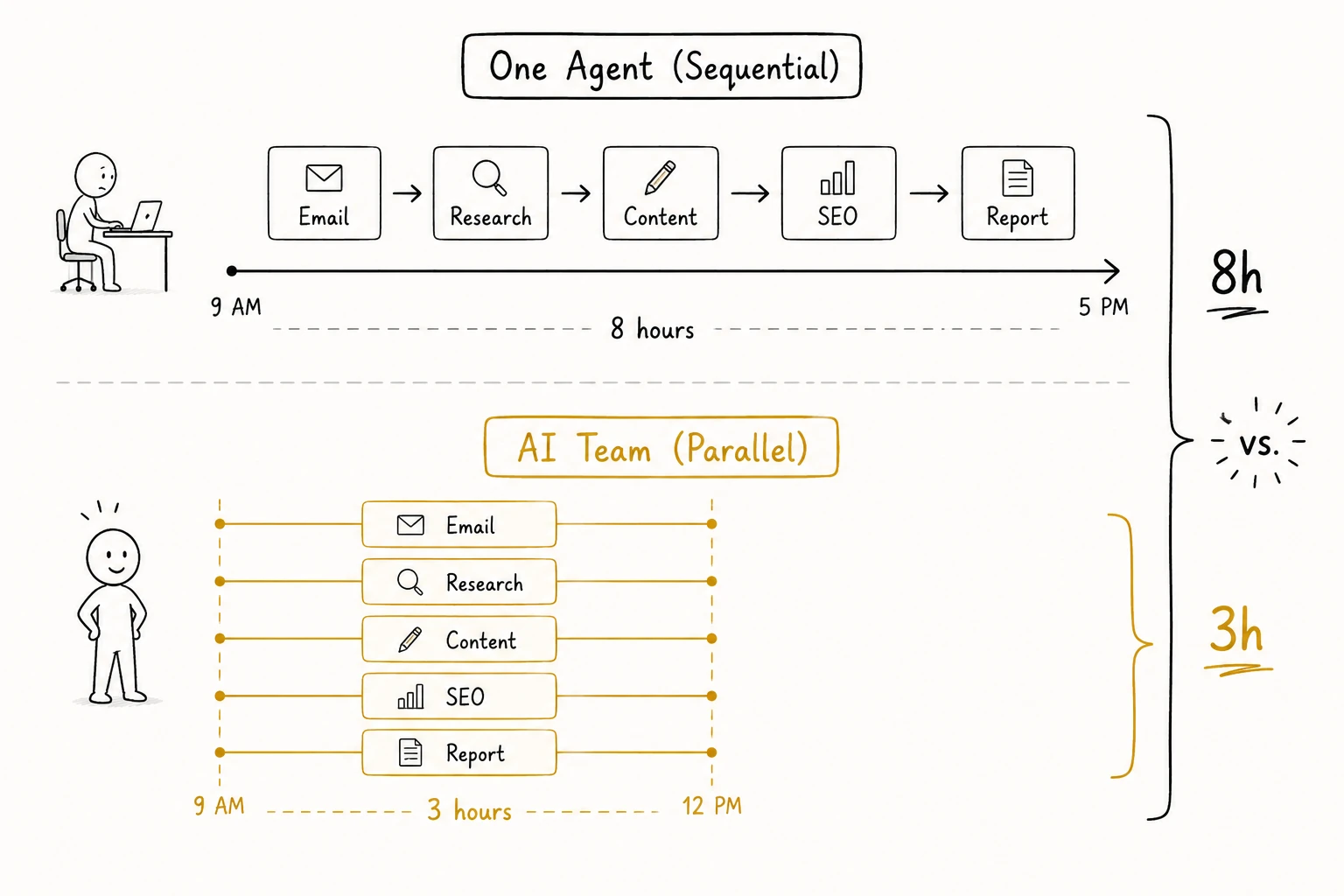
One agent processes one task at a time. While it writes your newsletter, your customer emails sit unread. While it researches competitors, your social content waits. You queue tasks, monitor output, decide what's next, feed the next instruction.
At five tasks a day, this feels productive. At twenty, you've spent your morning dispatching work instead of doing the thinking that actually moves your business forward. The agent is fast. You're the bottleneck.
What breaks when you run multiple agents without coordination
The obvious fix: open several sessions, assign different tasks. Now things happen in parallel.
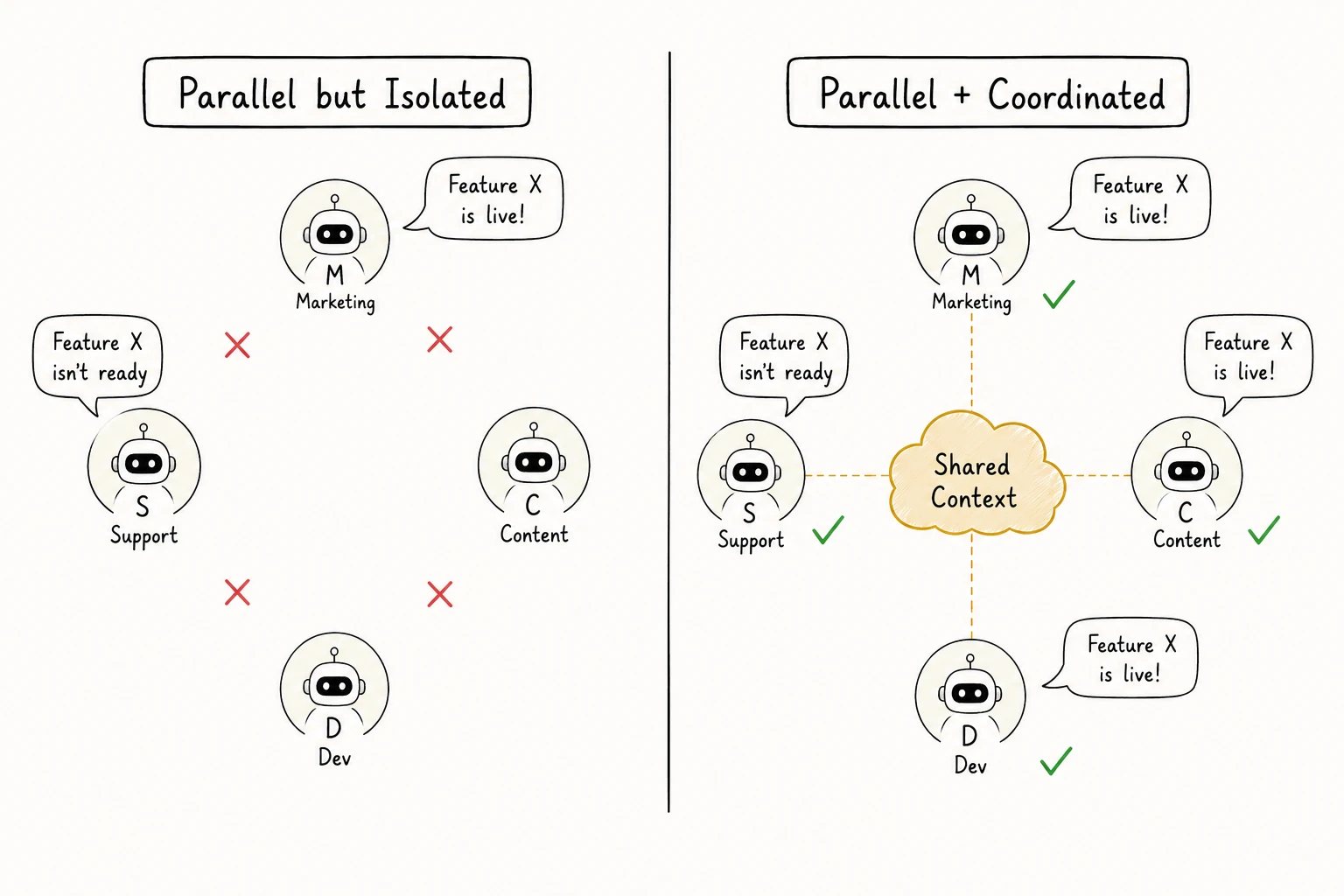
But parallel execution without shared context creates a new problem. Your marketing agent writes a campaign promising a feature. Your support agent tells a customer that feature isn't ready. Your content agent publishes something contradicting both. Each agent works correctly in isolation. Together, they produce inconsistency you'll spend hours cleaning up.
More agents without coordination doesn't scale. It multiplies contradictions.
How multi-agent collaboration works without code
You don't need to write orchestration scripts or build workflow diagrams to get agents working together. The no-code approach works through four mechanisms:
Shared rooms. Agents participate in the same channels and threads. When your dev agent posts an update, your support agent can read it in the same room. No manual syncing between separate chat windows.
Role specialization. Each agent owns a domain: content, support, research, operations. You describe the role in plain language and give it operating rules. The agent builds expertise within that function rather than being a generalist spread thin across everything.
Structured handoffs through messages. When content finishes a draft that needs SEO review, it sends the handoff in a message or thread. The SEO agent picks it up from its inbox. Work moves agent-to-agent through persistent communication rather than you copying between terminals.
Persistent communication. Agents message each other through channels and DMs. Your SEO agent finds a better keyword angle and notifies content to adjust. Your operations agent flags a scheduling conflict in the shared room. Coordination happens through the same messaging surface people use.
No workflow builders. No if-then logic. No API connections to maintain. You set up roles, write operating rules, and the agents communicate through persistent rooms.
For a deeper look at coordination patterns, see our guide on AI agent orchestration.
Single agent vs. multi-agent collaboration
| Dimension | Single agent | Multi-agent collaboration |
|---|---|---|
| Execution | Sequential: one task at a time | Parallel: multiple tasks simultaneously |
| Context | Isolated per session | Shared room/message history; private runtime context stays separate |
| Coordination | You are the router | Agents communicate through shared rooms |
| Scaling | More tasks = more of your time | More agents can run in parallel |
| Setup | Prompt engineering | Describe roles in plain language |
| Your role | Operator | Director |
When you need this
Multi-agent collaboration matters when:
- Tasks depend on each other across functions: content references what dev shipped, support reflects what marketing promised
- Consistency across outputs matters for your business
- Your daily volume exceeds what one agent handles without you becoming a full-time dispatcher
- You want automation without learning workflow tools or writing integration code
For isolated, single-domain tasks where one agent handles everything independently, a single agent still works fine. Multi-agent collaboration is for when the work is cross-functional and the coordination overhead lands on you.
Alook gives your AI agents shared rooms, persistent communication, and structured handoffs without writing orchestration code. Start free.